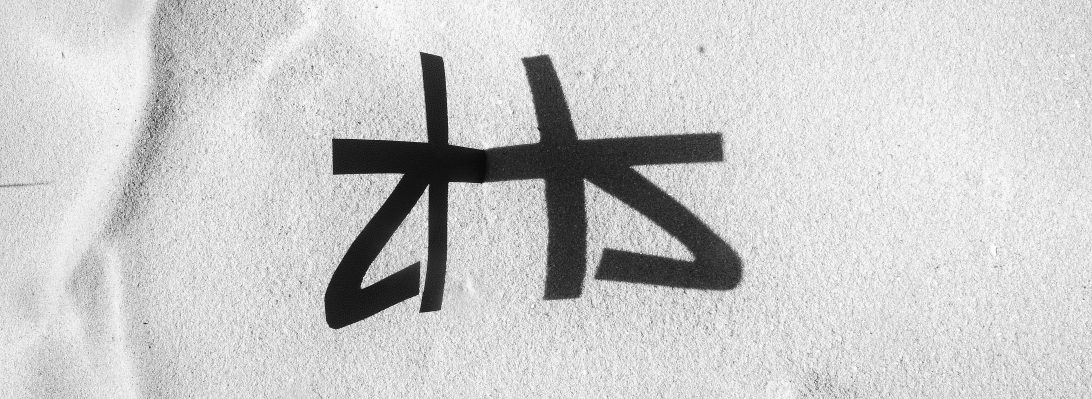
“Vibe Rations” is a visual study of the subtle frequencies embedded in our built environments. Using the signage ” Vibe on a building – throughout the series and juxtaposed with other signs , symbols and urban observations the series draws connections between physical space and felt energy. Through layered imagery and spectral overlays, this series captures the ghost-signals that vibrate beneath the surface of ordinary cityscapes. Traffic signs, buildings, trees, and ferris wheels emerge and dissolve like echoes—each image a rationed dose of energetic residue. These are not fixed moments, but trembling impressions—vibrations of place, memory, motion, and pause, dispersed in visual fragments. Like tuning a radio through urban static, the viewer is invited to feel the unseen tones of a moment: fleeting, fractured, and full of signal.
Time Waits for No One Is a Series of Photos and Videos using my Nanna’s old Photo Slides from the late 50’s to possibly around 70’s. My Nanna passed away in 1996 and the suitcase full of slides were stored untouched at my sisters house. Following my sisters passing in 2018 I began digitilising all of her slides ,at one point there was some technical problems and the digitalised images vanished from the hardrive. I’ve never gone back to digitilise the whole archive again though certain images stuck with me and alot of the slides were organised in boxes with the name of the location – possibly holiday destinations.
The intersection
One set of images which I was particularly drawn to was a set of images taken near an intersection where my nanna lived of a procession of 1920’s cars alongside the 1950s cars of the time. I was particularly drawn to this set of images as it was similiar to my initial project exploring frame by frame moving images ” Motion Marinade “.
With this set I initially aligned the frames and made a video I later explored the modern influences of technology and made a augmented Reality Filter of the animation reducing the opacity and returned to the location to capture a video. The scene has changed dramatically over the 60 plus years the previous railway crossing being replace with a train overpass and modern day cars
A place of beloning
A Place of Belonging is another Slide overlay video of a few slide images taken probably in the late 50’s early 60’s of a beach on th Mornington Peninsula near where I lived at the time , probably taken on a holiday or day trip my Nanna went on . The location was identified from a couple of other sides in the box. So as to keep the video without much movement I didnt use the augmented Reality Filter , I layered the images over the top i post production.
Bourke Street Mall- Melbourne 1960?
Amoungst my Nans Slides was quite alot of street photos-The research of the buildings led me to this location at The Bourke Street Mall in Melbourne. With this Video i mearged the old and new and made an augmented reality filter with the slide imaged and captured the video. The technology would have been incomprensionable 60 years ago
The concept” In Medias Res”began with the intention of creating recycled paper to print my final image on. As I delved deeper into the history of paper production andconsidered more sustainable options, the work evolved to explore the impact ofdeforestation, particularly how colonization and time have led to the devastation of old-growth forests, reducing them to treeless horizons to meet the demand for paper, wood and farming. Thankfully, there has been a shift towards more sustainable practices and the government have inforced that logging of native forests to cease. The alternative is the faster growing pine which is depicted in the final lenticular piece of a pineforest and the tree juxtaposed against an empty horizon and Koala –the Koala is used to signify the impact the pine forests have with native animals and their habitat and food.
The recycled paper used in this piece was sourced from the cut outs of the left side of the book and also the trials and errors. transforming it into a new work of art. All the images were capturedwith a 35mm camera and developed sustainably using either coffee or plants , reinforcing the theme ofsustainability.
This piece suggests that waste can be reimagined as a resource, turning the old into something new and valuable. It also reflects on the decline of knowledge and stories traditionally shared through books due to digital transformations, raising questions about the fate of books from the past and their place in our future. Central to this work is a visual narrative. The cross-section of a tree, gradually diminishing in size and cut from various images of forests within the book’s pages, mimics the rings of a tree, symbolizing the passage of time. It evokes the sensation of walking through a forest .
The book is displayed open in the middleof the story (in medias res) As we stand in the middle of this story (In Medias Res) , with the possibility of regeneration embrace new practices learnt from the trials and errors . This piece serves as a reminder that we are at a pivotal moment—a time of change and new possibilities, where the past and future converge to hopefully shape a more sustainable world.
Following on from my previous post I have decided to do a separate explanation of the series Form-A Different View which is a photographic exploration of transformation, perception, and possibility. This series follows the journey of a simple plastic bottle, capturing its metamorphosis from waste to woven textiles. The series explores the stages of the process, from the bottle’s initial form to its shadow, reflection, and eventual transformation into shredded plastic, threads, and finally, fabric and using both the negative a positive view of the image to suggest and inforce the use of a different perspective to be considered.
At its core, Form-A Different View challenges the conventional perspective of plastic bottles as mere waste, instead inviting viewers to see them as valuable resources with untapped potential. PET plastic has the potential to be recyled and reused in many ways .The series is a visual narrative that encourages a reimagining of our relationship with everyday objects, particularly those often discarded without a second thought.
By focusing on the different stages of the plastic bottle’s transformation, the series underscores the idea that our perspectives shape our understanding of the world. As Oscar Wilde famously remarked, “The optimist sees the donut, the pessimist sees the hole.” Similarly, this series suggests that by shifting our focus, we can uncover new opportunities in what might otherwise be seen as problems.
Through these images, I aim to inspire a conversation about sustainability, resourcefulness, and the power of perspective. Form- A Different View is not just about the transformation of a plastic bottle into textiles; it’s about transforming the way we think about consumption, waste, and the potential for renewal in our everyday lives.
NB: I am am a photographic artist and do not to claim to have a scientific background though I do have a very curious and inquistive mind and can see the bigger picture from both the negative a postive perspective. I really enjoy exploring ideas objectively and concepts visually to gain a better understanding of issues that I am passionate about . I am keen to learn more and find solutions that are sustainable.
I created two series of photos exploring The transformation of plastic bottles one explores the different views and perspectives of the plastic bottle form encouraging the viewer to look from different different perspectives and angles and see the form differently and the other series of in-camera double exposure using the plastic bottles and transformed textile as a lens. Both series were developed sustainably using developer made out of coffee and delve into the mesmerizing transformation of plastic bottles into sheer curtain textiles. The intricate process unfolds as the bottles are meticulously shredded, repurposed into delicate strings, and skillfully woven into textiles. Both series explores and demonstrates that PET bottles should be considered as a valuable resource not waste.
PET plastic is favored globally due to its exceptional performance qualities and high recyclability. When heated and molded, PET can take on numerous forms, with plastic water and beverage bottles being the most recognizable. These bottles provide a hygienic, safe, and convenient way to package drinks. The low melting point of PET, in comparison to materials like glass and aluminum, allows for easy and sustainable recycling, creating a closed loop system. Additionally, PET bottles can be repurposed into a wide range of products, including fabric for curtains, demonstrating their value beyond being discarded as waste. By exploring the various forms of these bottles shadow,silhouette and the processes involved in transforming PET bottles from shredded plastic to final products, it becomes evident that these bottles should be considered a valuable resource with immense potential.
Through the lens of these images, we are enticed to explore how the view of nature is altered when observed through this unusual material. The interplay of light and shadow, as the silhouettes of the bottles are layered with scenic views of the environment, creates a thought-provoking and visually compelling narrative. Encouraging us to reflect on the impact of our consumption habits, this series serves as a poignant reminder of the beauty that can emerge from sustainability and creativity intert.
In 1997 I was studying BA- Sculpture and photography at University. I dont have many photos of the creations I made and only found the above image yesterday.
The pants below were for one of the subjects I did where we had constant assignments and presented our creations every couple of weeks. I’m unsure if we chose the theme or it was allocated by the teacher though I do remember the theme was Camouflage.
I made alot of wearable art for this class . The camouflage pants displayed all my photos .
The double exposures images were created by initially finding images of animals of owls, wolfs, tigers from magazines from memory and then capturing self portraits doing similar poses of the animals with my 35mm film camera.Looking at them I see similar themes, ideas and concepts that still interest me today though back then I didn’t use Photoshop though I was very resourceful
In those days the photocopier was my favourite tool and I made transparent acetate copies of my photos then over layed them over the animal images and made a photocopy of the combined images finally transferring the images onto material using another of my favourite tools which was a fabric transfer medium.
I presented the pants suspended from the ceiling with a pile of leaves I drew on underneath… the designs on the leaves was inspired by research into first nation people who created material inspired by the design on leaves.
In the wilderness of life, I stand tall,
Camouflage pants made from faces, I wear them all.
Each face tells a story, a journey of its own,
But together, they protect me, like an army unknown.
It is a mind-boggling realization that we are composed of the same materials that make up stars, planets, and galaxiesThe revelation of our cosmic connection dawned upon me during a time of personal loss and contemplation. After the passing of my father, I found solace in observing and documenting the decomposition of flowers, witnessing the cycle of life and death. As I watched these once vibrant blooms wither away, I couldn’t help but contemplate the impermanence of life and the intricate web of existence.Through documenting the natural process of decay, I experienced a profound sense of catharsis, a release of emotions that allowed me to confront my grief. It was in these moments of reflection that I realized our physical bodies are not confined to this earthly realm but are intrinsically linked to the vast cosmos. We are part of a grand tapestry, connected to everything around us.Motivated by this personal experience, I embarked on a quest for a deeper understanding of our existence. Drawn to the ideas of reincarnation and rebirth, I delved into ancient philosophies and modern scientific theories that shed light on the nature of our being. It is fascinating to consider the possibility that our individual atoms and elements are recycled and redistributed throughout the universe, giving rise to new life forms and experiences.At the core of this concept lies the understanding that every atom in our bodies was once part of a star, forged in the fiery depths of stellar nurseries. These atoms, the building blocks of life, have journeyed through time and space, coming together to form the intricate biological systems that allow us to exist. In a very literal sense, we are made of stardust.
In twilight’s embrace, where dreams softly entwine, I’ll paint you a portrait, a tale so divine. Where flowers, once vibrant, now wither and decay, As stars, like tears, fall, in celestial array.
In the realm of blossoms, where life dances free, Petals bloom in colors, as sweet as can be. But time weaves its threads, fate’s cruel, restless gust, And innocence, like flowers, fades into dust.
The velvety rose, once blood red and flame, Now whispers of longing and forgotten name. Its petals, once fragrant, now crumble and fall, As stars, teardrops glisten, in night’s cosmic sprawl.
Oh, witness the floral tapestry’s descent, As nature exhales, its fleeting lament. Each petal a memory, delicate and frail, As stars, shimmering crystals, begin to exhale.
Gone is the splendor, the garden’s grand array, Yet artistry flourishes in this grand decay. For as flowers decompose, returning to earth, The essence of beauty is granted rebirth.
And whilst stars shed their teardrops, in mournful delight, Human hearts gather courage, their souls taking flight. For within this fleeting beauty, we find solace and trust, In this dance of decay, where the cosmos adjusts.
So, let the flowers wither, let stars continue to weep, We’ll embrace their transformation, our sorrows shall keep. For in this juxtaposition, where beauty meets despair, Our souls are awakened, by the tapestry we wear.



 Zoé Haynes-Smith Photography